Outdoor WiFi Extender: UK Buyer's Guide
If another meeting has dropped in the garden office while the ISP hub sits downstairs, the tempting fix is the device with the loudest range claim. The durable fix starts with the path: router to backhaul, backhaul to outdoor radio, and radio to the laptop. A weakness in any one leg can still interrupt the call.
Extender, outdoor access point or bridge?
| Device | What it does | Best fit | Main limit |
|---|---|---|---|
| Wireless outdoor extender | Receives and repeats an existing WiFi link | Short garden path with a strong source signal | Cannot repair weak backhaul |
| Outdoor access point | Creates outdoor WiFi from Ethernet/PoE | Patio, camera area or nearby garden office | Needs a safe cable and power plan |
| Point-to-point bridge | Links two fixed locations | Detached building with clear line of sight | Usually needs a local access point at the far end |
For a separate office, see the dedicated WiFi for outbuildings setup guide. This page owns the outdoor equipment buying decision, not the whole detached-building network.
Six checks that matter before purchase
1. Manufacturer-approved outdoor use
Look for an explicit outdoor deployment statement and follow the mounting instructions. An IP code describes tested enclosure protection; it is not permission to ignore cable glands, orientation or temperature limits.
2. A suitable IP rating
Under IEC 60529, IP65 denotes a dust-tight enclosure and protection against water jets under the standard's test conditions. It does not mean the unit can be submerged, and a complete installation is only as sound as its connectors and seals.
3. Backhaul
Ethernet gives the radio a dedicated path. A wireless extender is appropriate only where it still receives a strong source link. Test that position before ordering.
4. Power method
PoE can carry data and power on one Ethernet cable, but the access point, injector or switch and cable must use compatible standards. Budget for the PoE source separately if it is not included.
5. Antenna pattern and mounting point
A broad patio and a narrow path to a garden room are different shapes. Follow the manufacturer's radiation-pattern and orientation guidance rather than assuming a larger dBi number is always better.
6. UK radio configuration
Ofcom's 20 July 2026 statement permits outdoor and higher-power 6 GHz WiFi only where devices operate under an Automated Frequency Coordination (AFC) system. Other bands and power modes have their own conditions, and implementation documents can change. Use UK-market hardware, its country setting and the current requirements for the exact installation.
A garden-office buying sequence
- Test the existing signal at the proposed radio position and inside the office.
- Choose wired backhaul if a reliable cable route is practical.
- If the buildings are detached and a cable is unsuitable, assess a point-to-point bridge with clear line of sight.
- Select a genuinely outdoor-rated radio for the exposed position.
- Plan PoE, weatherproof termination and safe cable entry before mounting.
- After installation, test a real video call at the desk with the office door shut.
This sequence addresses two common worries directly: paying for another device that still leaves a dead spot, and discovering too late that PoE or network configuration is not plug-and-play. A professional installer is sensible where exterior drilling, difficult access, separate-building cabling or electrical protection is uncertain.
Where the Wifora U7-LR fits—and where it does not
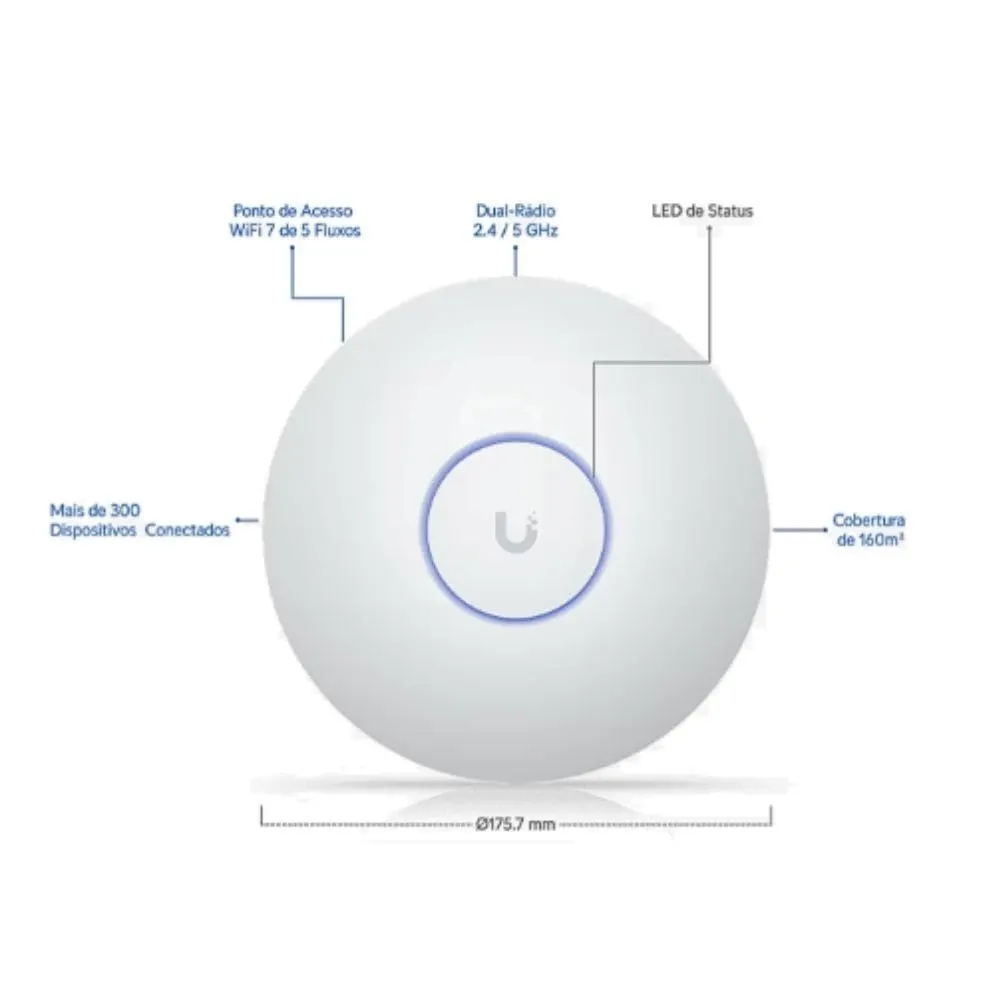
The Ubiquiti U7-LR can be an indoor WiFi 7 access point in the main building or office. Ubiquiti lists PoE, a 2.5 GbE uplink and ceiling/wall mounting. It is not the outdoor enclosure described in this guide, so keep it indoors and choose a manufacturer-approved outdoor model for exposed mounting.
For distance planning rather than product selection, use the separate outdoor WiFi extender range guide.
Frequently asked questions
Is an outdoor access point better than a WiFi extender?
For a fixed work area, an Ethernet-fed outdoor access point is often more predictable because it does not repeat a weak wireless hop. An extender can still suit a short path where its source signal is strong.
Is IP65 enough for an outdoor WiFi extender?
IP65 describes dust-tight and water-jet protection under IEC 60529 tests. Suitability still depends on the manufacturer's approved location, mounting orientation, connectors, temperature range and exposure.
Do I need PoE for outdoor WiFi?
Many outdoor access points use PoE, but the exact requirement is model-specific. Confirm the access point, injector or switch and cabling use compatible standards before purchase.
Can I use 6 GHz WiFi outdoors in the UK?
Do not assume every 6 GHz mode is permitted for fixed outdoor use. Ofcom's 20 July 2026 statement permits outdoor and higher-power use only under AFC control; check the current implementation rules, UK settings and equipment support for the intended installation.
Sources and scope
Technical sources checked on 20 July 2026. Manufacturer specifications and UK spectrum conditions can change; verify the current document for the exact equipment and installation.
Ready to upgrade your indoor network with Wifora?
View the indoor U7-LR — £322.85